

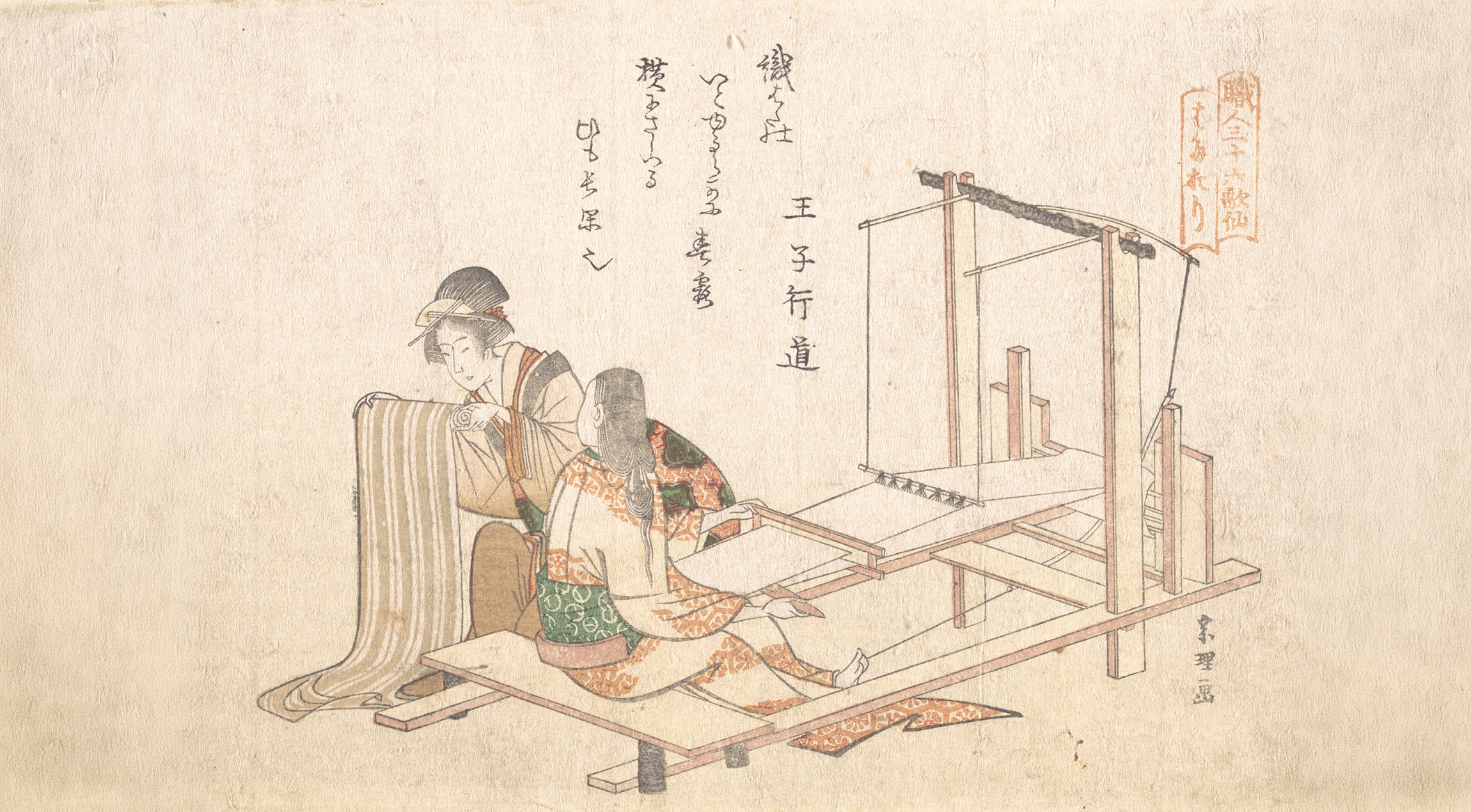
The Weaving Factory, Katsushika Hokusai, ca. 1802. Japanese woodblock print, Edo period.
Image: The Metropolitan Museum of Art, New York – Open Access, CC0 1.0.
Legend has it that a single night was enough to weave an entire world.
In Taima, in Japan’s historic Nara region, a young woman named Chūjō-hime longed to glimpse the Pure Land, the realm promised by Amida Buddha. According to the legend, divine beings fulfilled her wish, weaving an image of that world from lotus threads. For centuries, this story has accompanied the Taima Mandala, a sacred tapestry depicting that paradise. Preserved in the temple that bears its name, it is among the earliest surviving examples of tsuzure-ori, the Japanese art of tapestry weaving.
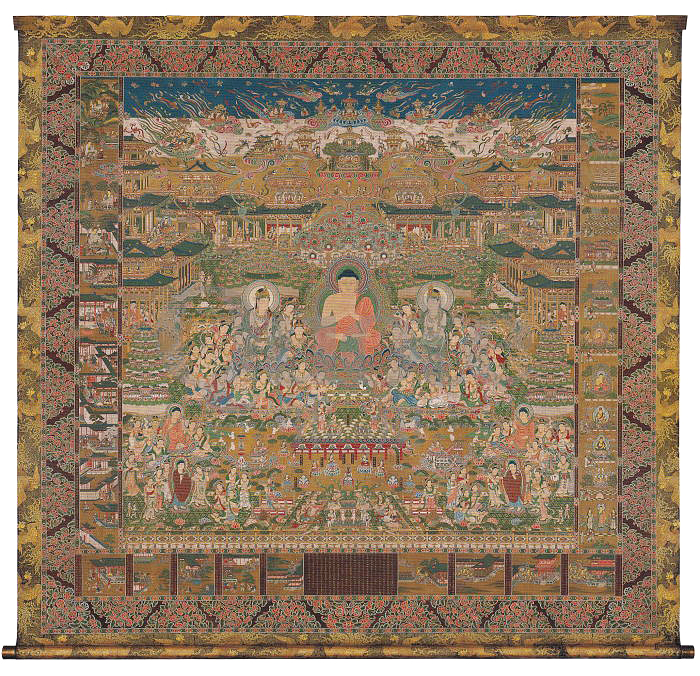
Mandala di Taima, Giappone, 1750. Dipinto su seta, periodo Edo.
Immagine: The Metropolitan Museum of Art, New York – Open Access, CC0 1.0.
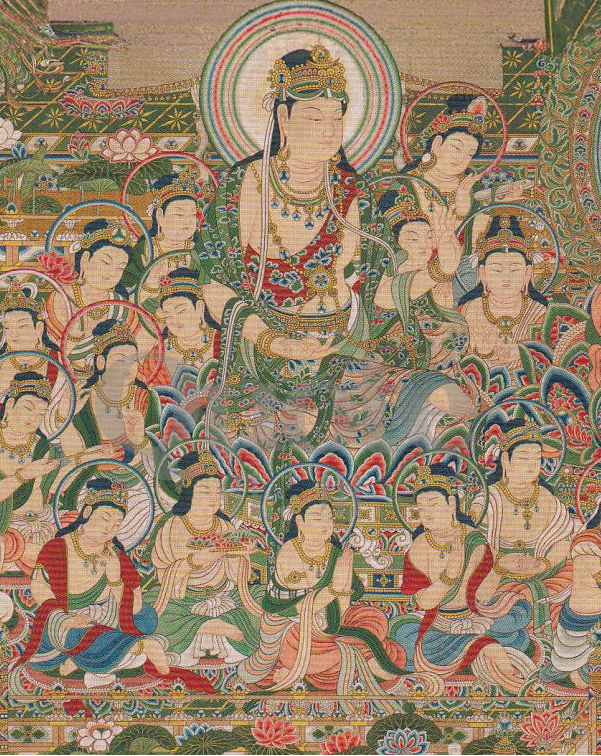
Mandala di Taima, dettaglio raffigurante il Buddha Amida circondato da bodhisattva.
The myth grants a single night to what hands take a lifetime to learn.
This knowledge finds expression through the weavers’ own bodies: quite literally, they carry their tools at their fingertips. Using a small file, they notch their nails into fine, regular teeth, like those of a comb. Known as tsumekaki, this practice allows them to draw the threads towards themselves and press them closely together on the loom, with the care needed to reveal the outline of a figure or a subtle shade of colour.
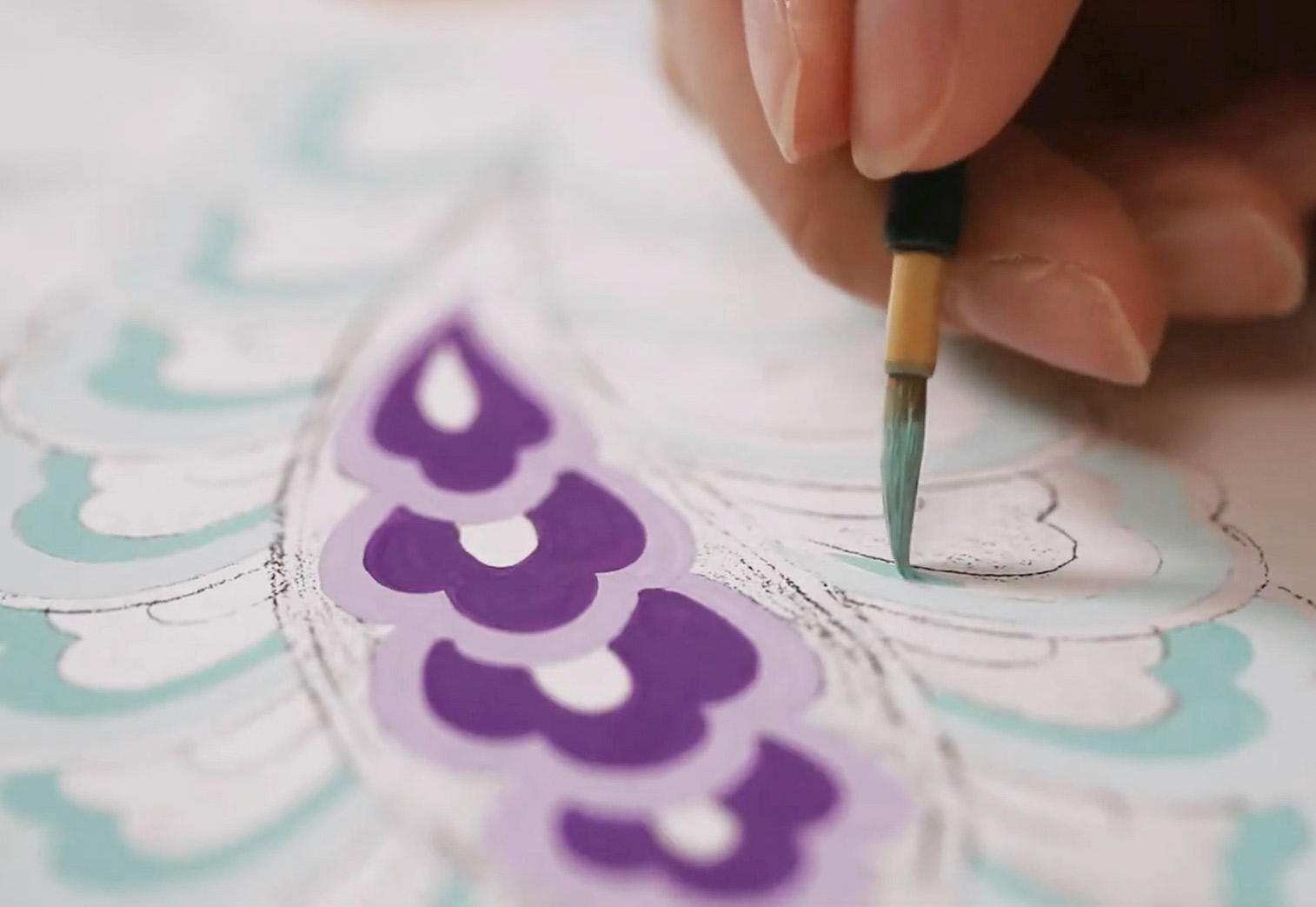
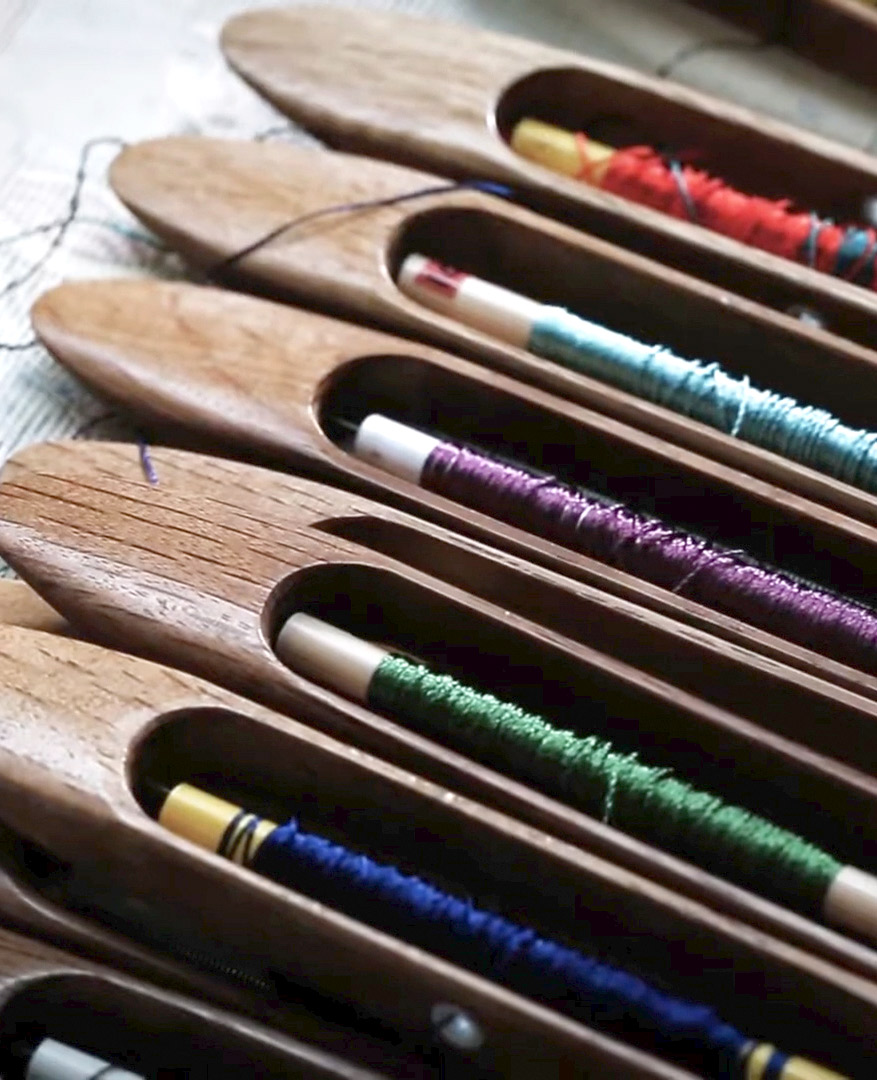
Photos and video: courtesy of Kawashima Selkon Textiles Co., Ltd.
The thickness of the yarns and the design determine how long the work takes. In the most intricate passages, even an experienced master may advance only a few centimetres in an entire day. An obi, the sash traditionally worn to secure a kimono, can take months to weave.
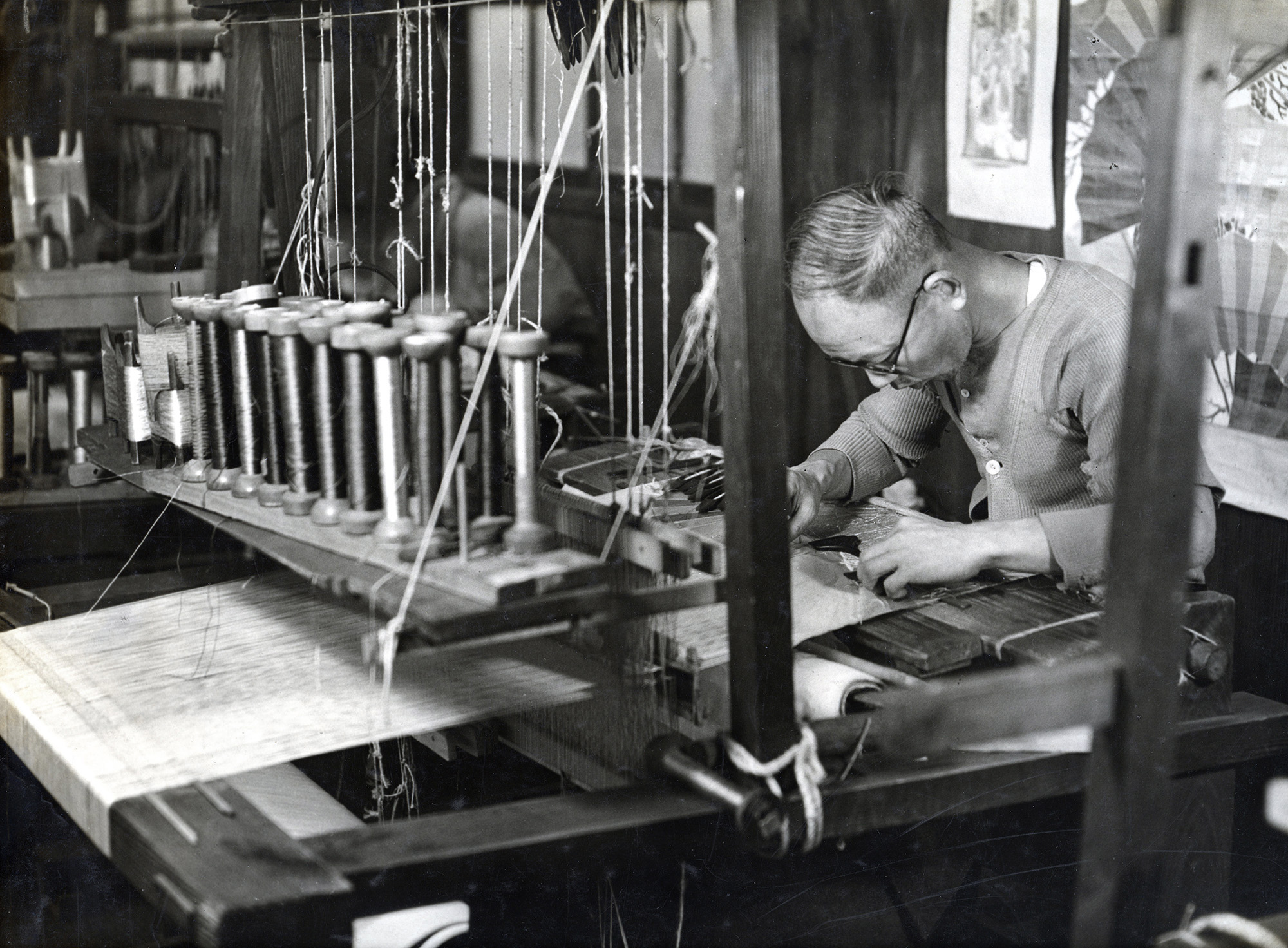
Scenes of Tsuzure Weaving, ca. 1930s–1940s.
Photo: Courtesy of Kawashima Selkon Textiles Co., Ltd.
Among those helping to preserve this knowledge is Kawashima Selkon Textiles, whose history began in 1843 in Kyoto, where the Nishijin district remains one of the historic centres of tsuzure-ori. Alongside the skill of its artisans, the company sustains a daily commitment to passing on Japanese textile culture.
Its museum preserves works and documents, while its school, founded in 1973, offers students practical training in design, dyeing and weaving. In the workshops, master weavers experiment with materials and techniques to extend the expressive possibilities of their craft.
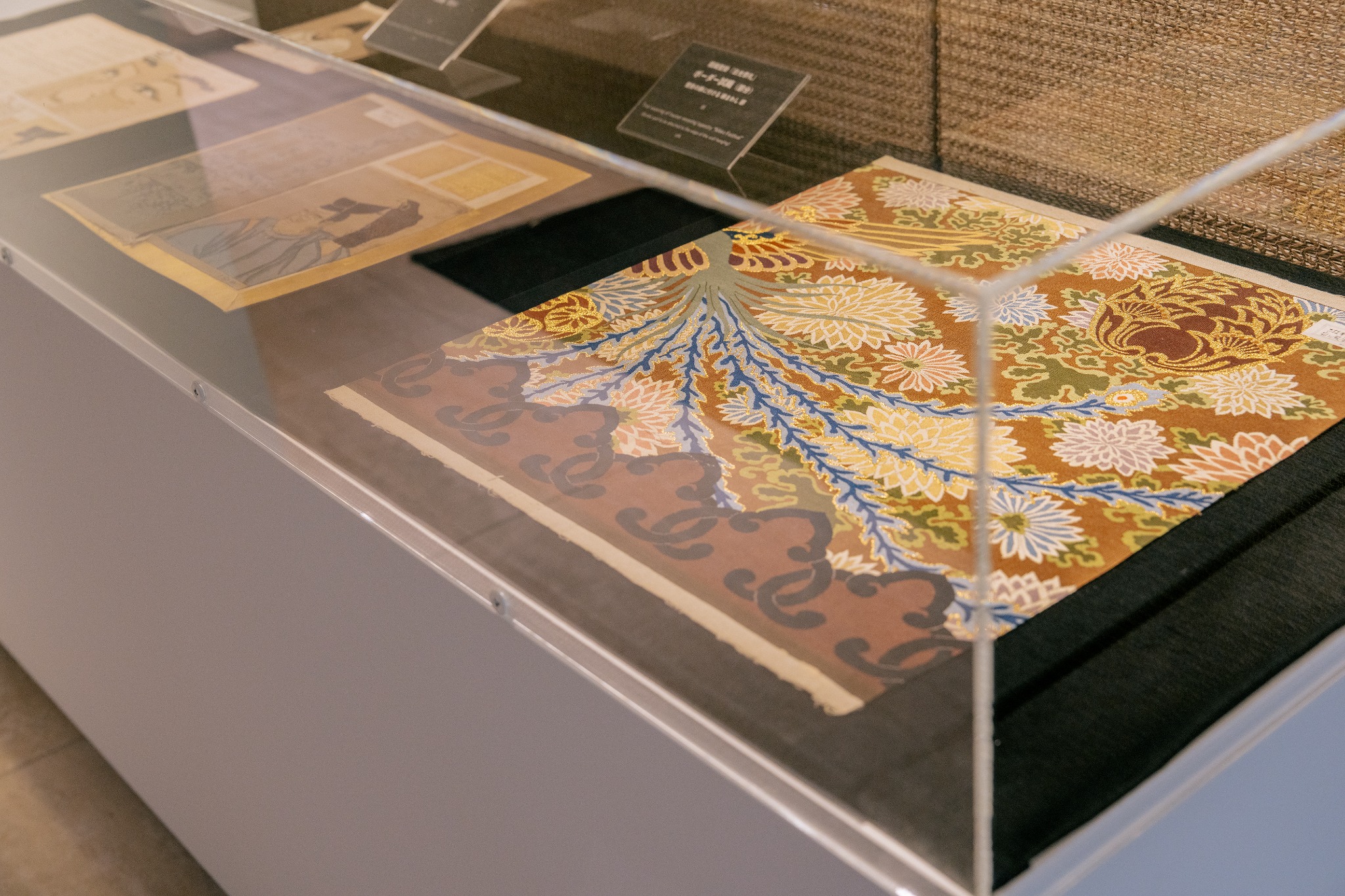
Photos: Kota Naito.
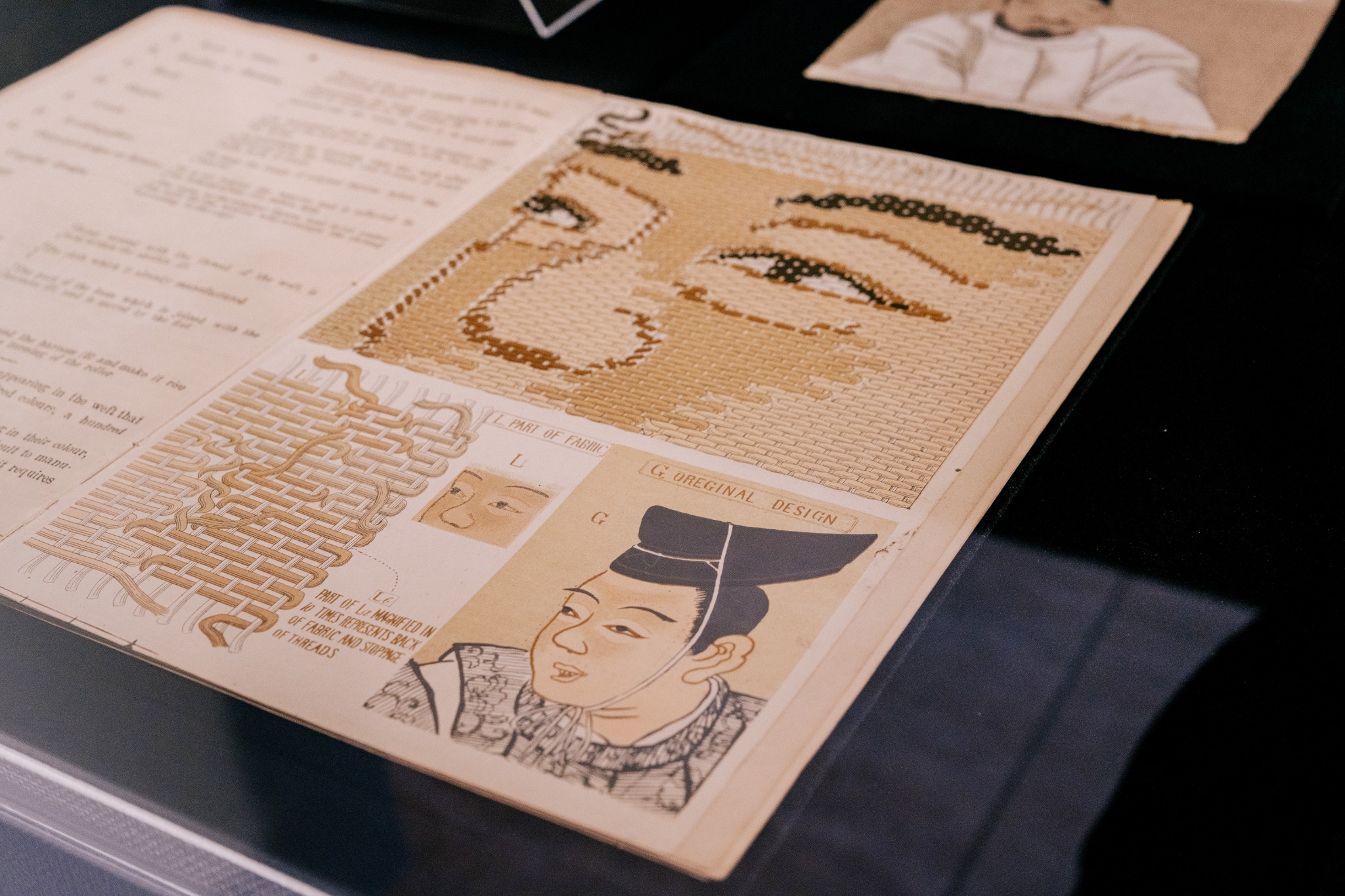
This continuity between memory and experimentation found expression in Woven Strata, the exhibition presented by Kawashima Selkon Textiles at Paola Lenti Milano during Milan Design Week 2026, under the art direction of Izumi Okayasu. The exploration continued that autumn at the Paola Lenti Tokyo flagship in Azabudai with Woven Landscapes, held during DESIGNART TOKYO 2026. The exhibition brought Paola Lenti furniture together with selected works and materials from the Kawashima museum.
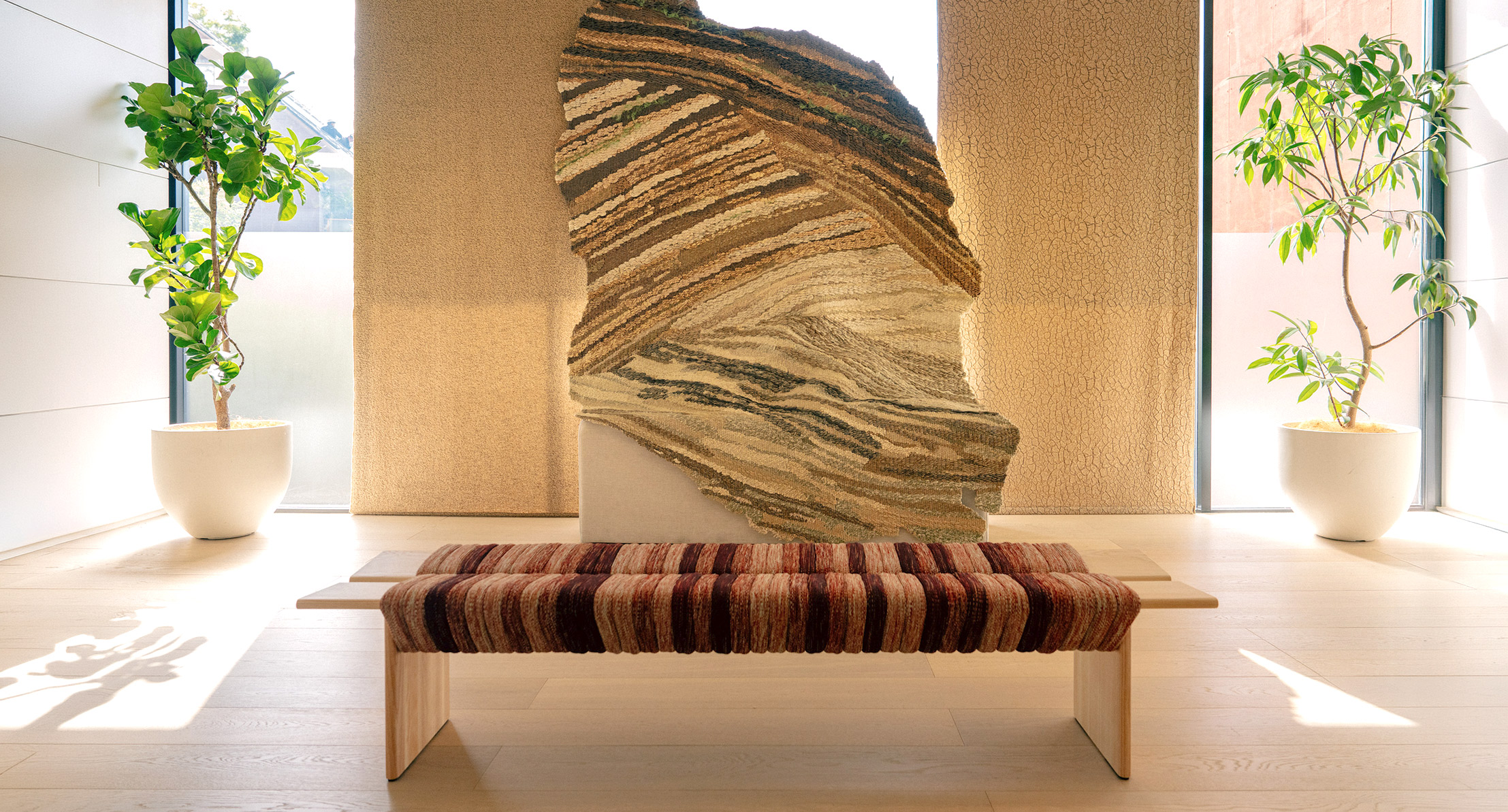
Photo: Kim Ji Hyun.
In the dedication with which Kawashima Selkon Textiles preserves and renews its knowledge, Paola Lenti recognised a deep affinity with its own established approach to design. The close study of yarns, their properties and the ways they interlace guides the development of its materials and continues well beyond their creation, exploring further possibilities. Colour is integral to this research: each shade is refined in relation to the fibre that carries it and the feel of the resulting surface.
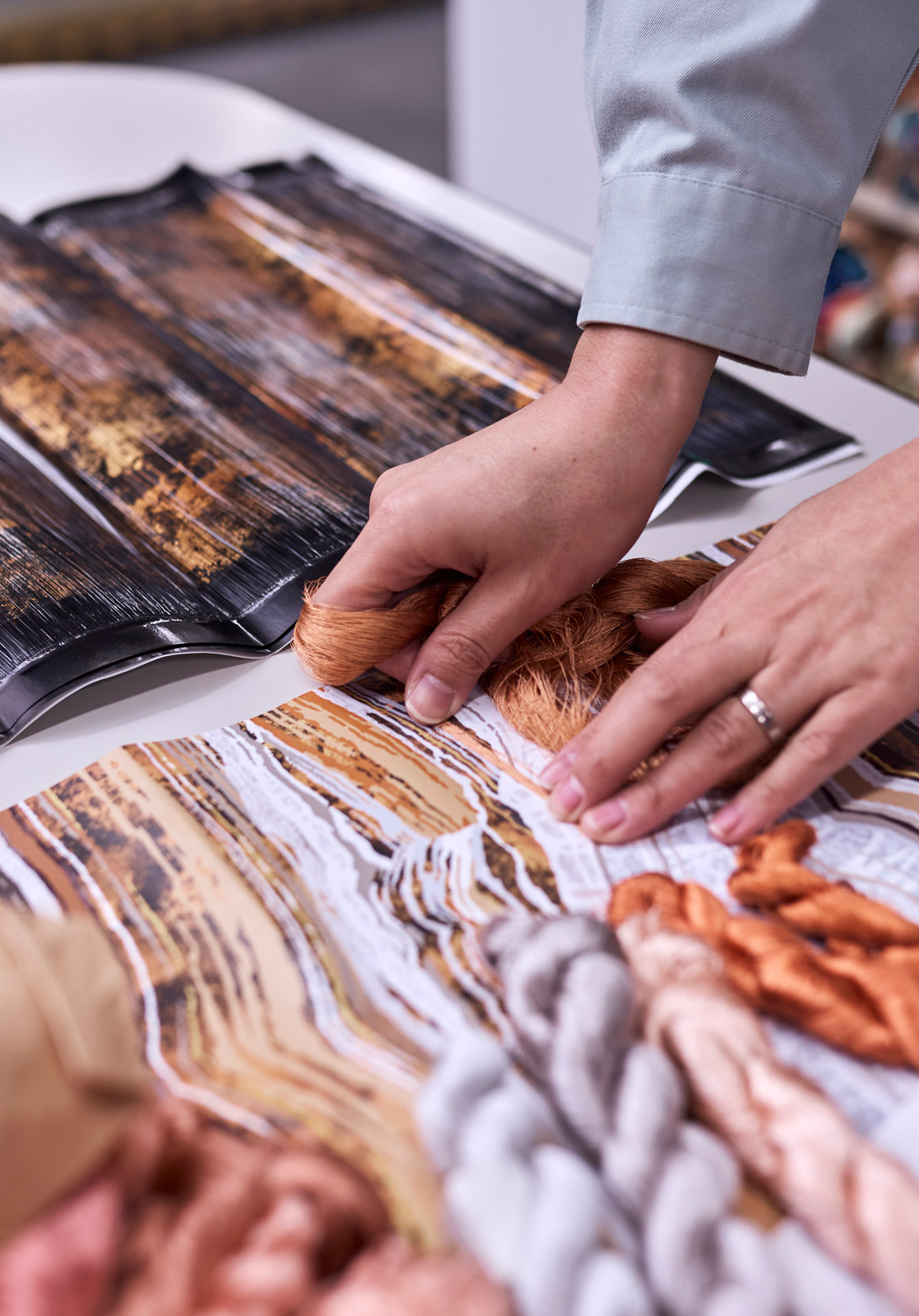
Photo: courtesy of Kawashima Selkon Textiles Co., Ltd.
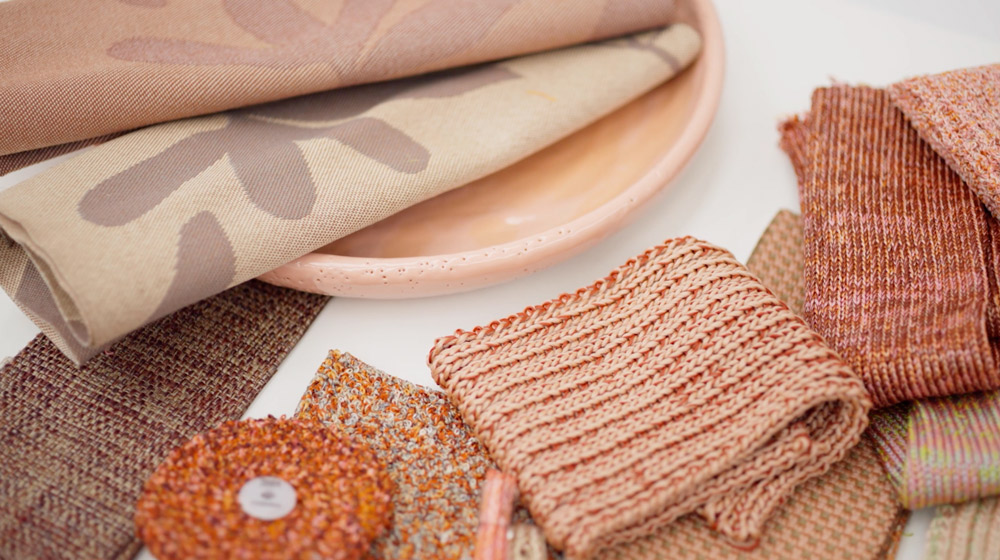
Photo: Paola Lenti srl.
For both companies, keeping craft knowledge alive means nurturing it through daily work and making it part of research. Tradition evolves through gestures learned, repeated and refined over time, leaving traces in the weave that sustain a living connection with the past.